

Persuasive, captivating and bursting with insight, this dual biography by acclaimed journalist Jim Windolf dives into the surprisingly supportive, occasionally rivalrous, always fertile relationship between Bob Dylan and the Beatles.
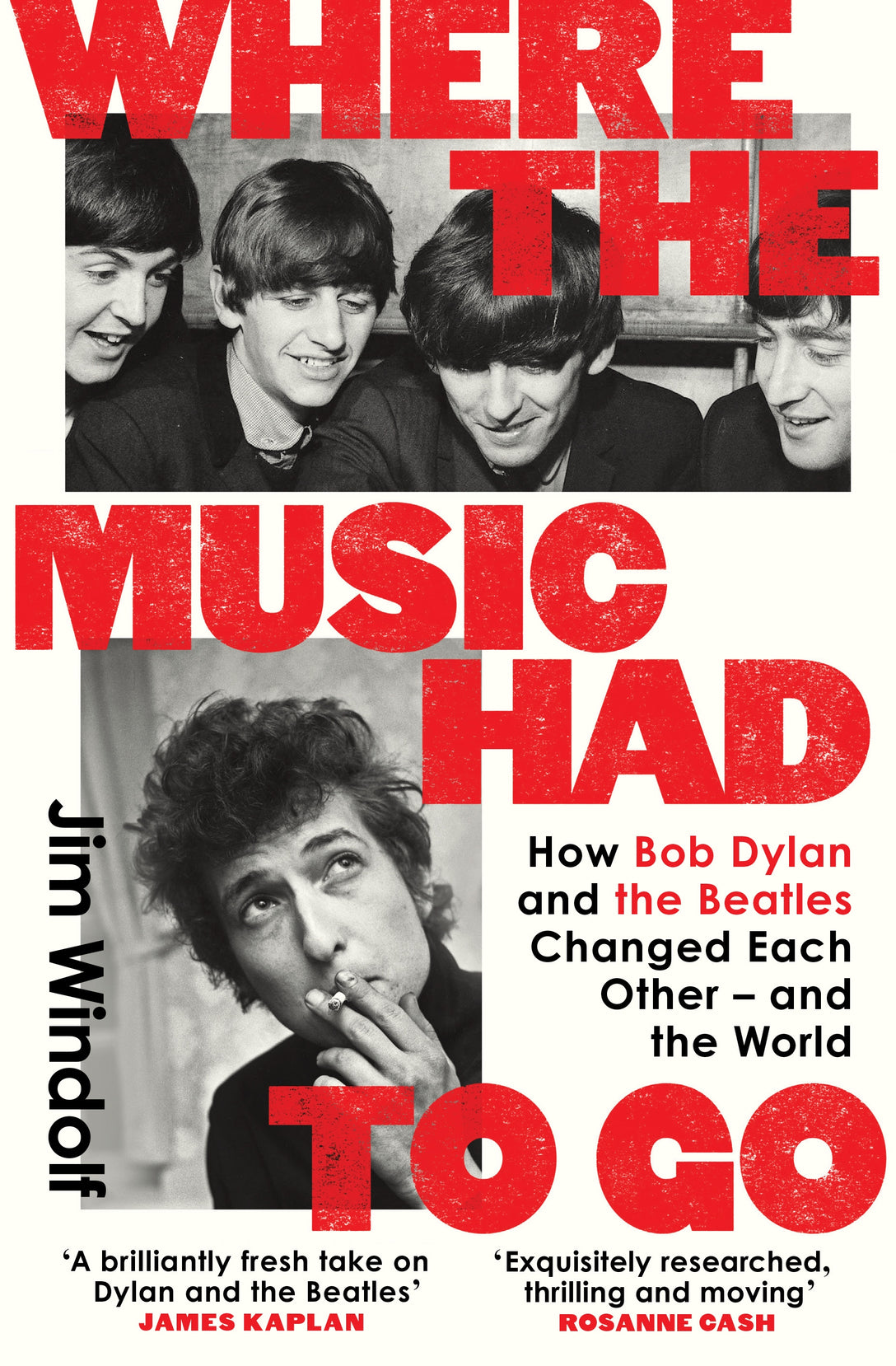
Here's an exclusive extract to give you a taste...
The careers of Dylan and the Beatles followed the same twists and turns. While the similarities resulted, in part, from chronological happenstance and societal tides beyond their control, no one else went through what they went through. They had an outsize effect not only on popular culture but the world at large, an influence that sparked to life when they offered themselves to a populace increasingly shaped by a generation hungry for the messages they conveyed. They came to be seen not so much as entertainment stars in the mold of their two most analogous predecessors, Elvis Presley and Frank Sinatra, but as seers or gurus, a role they sometimes courted with songs of grand pronouncement (“The Times They Are A-Changin’”; “All You Need Is Love”) and sometimes dismissed with shows of disdain.
They hit similar heights, but did not move in lockstep. Dylan was the embodiment of the skeptical, often aloof individualist, while the Beatles presented an ideal of unity and friendship. Dylan could be bleak in songs that grappled with injustice and the closer-to-home pains of love and loss, delivering them with a voice-in-the-wilderness anger or the mournful acceptance of Ecclesiastes, while the Beatles tended to glow with an exuberance steeped in a more optimistic worldview bolstered by their love for one another. As Dylan wrote of the Beatles in his 2004 memoir, Chronicles: Volume One: “They offered intimacy and companionship like no other group.”
Throughout much of their evolutions, Dylan and the Beatles worked in a state of mutual awareness, minds in dialogue. Who else could even begin to understand? This comparative biography starts in the immediate postwar era, when Dylan, Lennon, McCartney, Harrison, and Starr were listening to the same music and adopting similar attitudes, even as they were growing up thousands of miles apart. It goes on to tell the stories of their many interactions, while also, I hope, shedding light on the nature of their respective genius. In these pages I won’t go so far as to argue that Dylan was the fifth Beatle, but I will make the case that the relationship was deeper and more consequential than has been noted by earlier writers.
This is an extract from Jim Windolf's book Where the Music Had to Go, about the relationship between Dylan and The Beatles, which is out now